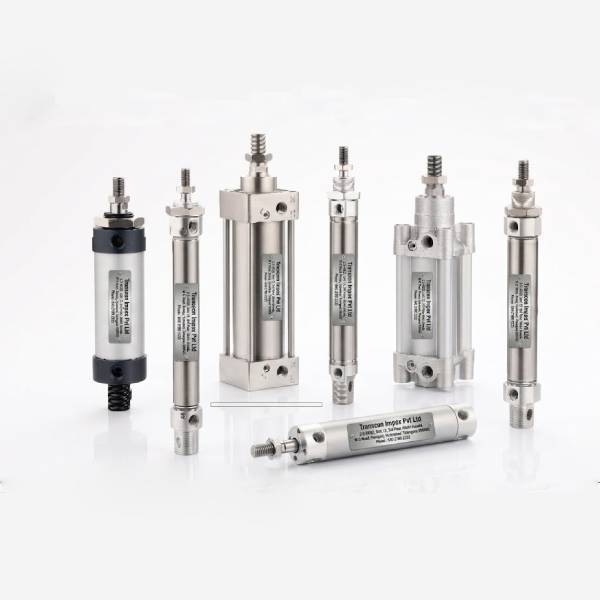
Pneumatic systems are widely used in industrial automation to produce controlled mechanical movement. One of the key components in these systems is the pneumatic cylinder, which converts compressed air into linear mechanical force.
Pneumatic cylinders are used in manufacturing machinery, packaging equipment, material handling systems, assembly lines, and other applications that require repetitive movement. Different operations require different cylinder designs, so the selection should consider force, bore, stroke length, operating pressure, speed, mounting, and working environment.
This guide explains how pneumatic cylinders work, their common types, industrial applications, and the information to check before selecting one.
What is a pneumatic cylinder?
A pneumatic cylinder is a mechanical device that uses compressed air to create movement. In a conventional rod-type cylinder, air pressure moves a piston inside a cylinder barrel. The piston rod transfers that movement to an external load. Pneumatic cylinders are commonly used for pushing, pulling, lifting, lowering, clamping, positioning, sorting, and ejecting components.
How do pneumatic cylinders work?
- Compressed air is supplied from an air compressor or central pneumatic system.
- A directional control valve (pneumatic solenoid valve) directs the air into the required cylinder port.
- Air pressure acts on the effective piston area and creates force.
- The piston moves inside the barrel and transfers movement through the rod or carriage.
- The cylinder returns through a spring, external load, or compressed air supplied to the opposite chamber, depending on its design.
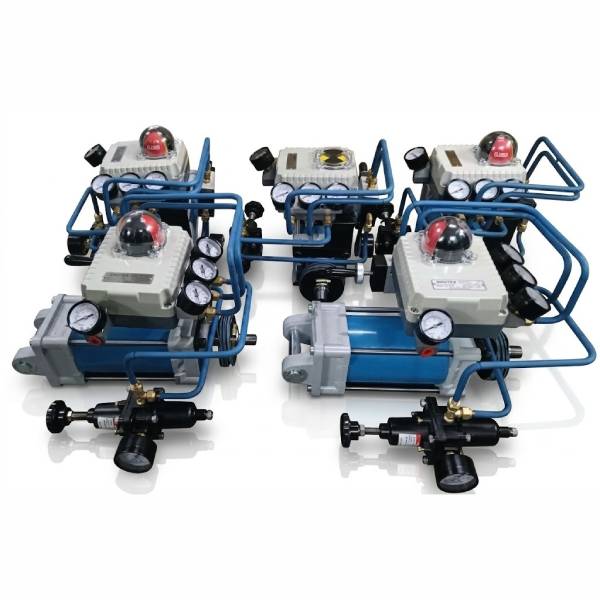
A typical circuit may include an air preparation unit, directional valve (see how to select an industrial solenoid valve), flow-control devices, tubing, and the cylinder. The exact arrangement depends on the machine and operating requirements.
Types of pneumatic cylinders
1. Single-acting pneumatic cylinders
A single-acting cylinder uses compressed air to move the piston in one direction. A spring or external force returns the piston. It generally has one working air port. Typical applications include clamping, ejecting, simple pushing, and positioning tasks where powered movement is required in one direction and a spring return is suitable.
2. Double-acting pneumatic cylinders
A double-acting cylinder uses compressed air for both extension and retraction. Air is supplied alternately to the two chambers, allowing controlled movement in both directions. They are common in material handling, packaging machinery, assembly equipment, positioning systems, and applications that require powered movement in both directions.
3. Compact pneumatic cylinders
Compact cylinders are designed for installations where space is limited. Their body length is typically shorter than that of many standard cylinders with comparable bore sizes. Check available stroke, force, mounting and load guidance before selection.
4. Rodless pneumatic cylinders
Rodless cylinders move a carriage along the cylinder body without a conventional external piston rod extending from one end. They can be useful for longer strokes where overall installation length is a concern. Different designs use different sealing and load-guidance arrangements.
5. Guided pneumatic cylinders
Guided cylinders include additional guide rods or a guided carriage to help support side loads and resist rotation. They are used in pick-and-place, clamping, handling, and positioning applications. Confirm load moment and guidance limits in the datasheet.
6. Tandem pneumatic cylinders
Tandem cylinders use more than one piston arrangement to provide increased output force within a particular design envelope. Their actual force depends on piston areas, operating pressure, and construction. Check the manufacturer’s force data rather than assuming a universal multiplier.
7. Pneumatic power cylinders
Pneumatic power cylinders are designed for applications requiring a specified force or specialised movement. Their suitability depends on the model’s construction, force, stroke, pressure, and mounting requirements.
Single-acting vs. double-acting pneumatic cylinders
| Comparison factor | Single-acting cylinder | Double-acting cylinder |
|---|---|---|
| Air ports | Generally one working port | Generally two ports |
| Powered movement | One direction | Both directions |
| Return | Spring or external force | Compressed air |
| Force | Pneumatic force in one direction | Pneumatic force in extension and retraction, with different effective areas |
| Typical use | Clamping, ejecting, simple pushing | Positioning, handling, repeated extension and retraction |
Industrial applications of pneumatic cylinders
Pneumatic cylinders are used in manufacturing lines for clamping and component transfer; in packaging equipment for pushing, sealing, cutting and sorting; in automotive production for assembly and workpiece holding; in food and pharmaceutical machinery for suitable handling and packaging operations; and in material handling systems for lifting, transferring and positioning. The cylinder’s materials, seals, lubrication requirements, and cleanliness suitability should be checked against the actual environment and applicable industry requirements.
How to select the right industrial pneumatic cylinder
- Calculate the required force: The theoretical extension force is calculated as pressure multiplied by effective piston area. For a rod-type double-acting cylinder, the retraction force is based on the annular area after subtracting the piston rod area. Actual force is lower because of friction and pressure losses.
- Select the bore size: Bore diameter determines piston area and therefore influences available force at a given pressure. A larger bore can provide more theoretical force, but it also affects cylinder dimensions and air consumption.
- Determine stroke length: Stroke is the distance travelled by the piston. Select a stroke that meets the machine’s movement requirement while accounting for end clearances, cushioning, and mechanical stops where applicable.
- Confirm operating pressure: Check the minimum and maximum pressure available at the cylinder and compare it with the manufacturer’s permitted operating range.
- Consider speed and cycle rate: Cylinder speed depends on pressure, flow capacity, load, tubing, valve size, and cushioning. Ensure that the directional valve and air supply can support the required cycle rate.
- Check mounting and load direction: Choose a mounting style suited to the mechanical arrangement. Avoid applying side loads to a standard piston rod unless the cylinder is designed to accommodate them. Guided cylinders or external guides may be needed.
- Review environment and materials: Check ambient and media temperature, dust, moisture, corrosion, seal compatibility, rod protection, and any washdown or cleanliness requirements.
Common pneumatic cylinder problems
Air leakage may result from damaged seals or loose fittings. Slow movement can be caused by insufficient air pressure, restricted flow, or excessive load. Irregular motion may indicate contamination, misalignment, or mechanical wear. Insufficient force may result from an undersized bore or pressure loss. Regular inspection, proper air preparation, correct mounting, and adherence to the manufacturer’s maintenance instructions help reduce these issues.
Pneumatic cylinders and valve actuators: what is the difference?
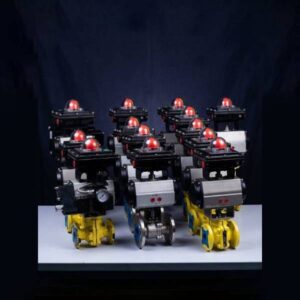
Pneumatic cylinders generally produce linear movement for machinery and equipment. Pneumatic actuators for valve automation are designed to operate valves and may produce rotary movement for quarter-turn ball and butterfly valves. Both use compressed air, but they serve different mechanical functions and should not be treated as interchangeable products (see also valve automation accessories and our industrial automation products).
Enquire About Pneumatic Cylinders from Transcon Impex
Selecting the right cylinder begins with the required force, bore, stroke, operating pressure, speed, mounting arrangement, and environment. Share your application details, dimensions, pressure, and quantity with Transcon Impex to discuss relevant product options and availability.
Frequently asked questions about pneumatic cylinders
01 What is a pneumatic cylinder used for?
It converts compressed air into mechanical movement and is commonly used for pushing, pulling, clamping, lifting, sorting, and positioning in industrial machinery.
02 What are the main types of pneumatic cylinders?
Common types include single-acting, double-acting, compact, rodless, guided, tandem, and specialised power cylinders.
03 What is the difference between single-acting and double-acting cylinders?
A single-acting cylinder uses compressed air for movement in one direction and a spring or external force for return. A double-acting cylinder uses compressed air for both extension and retraction.
04 How do I calculate pneumatic cylinder force?
Theoretical force equals operating pressure multiplied by effective piston area. For retraction, subtract the piston rod area from the piston area. Actual force is lower because of friction and pressure losses.
05 What determines pneumatic cylinder speed?
Speed depends on air pressure, flow rate, cylinder size, load, valve capacity, tubing, and cushioning.
06 What is the stroke length of a pneumatic cylinder?
Stroke length is the distance travelled by the piston between its end positions.
07 Where are industrial pneumatic cylinders used?
They are used in manufacturing, automotive production, packaging, material handling, food processing, pharmaceutical equipment, and general automation.
08 What is the difference between a pneumatic cylinder and a pneumatic valve actuator?
A cylinder generally produces linear motion for machinery. A valve actuator operates a valve and may produce rotary movement for quarter-turn valves.